



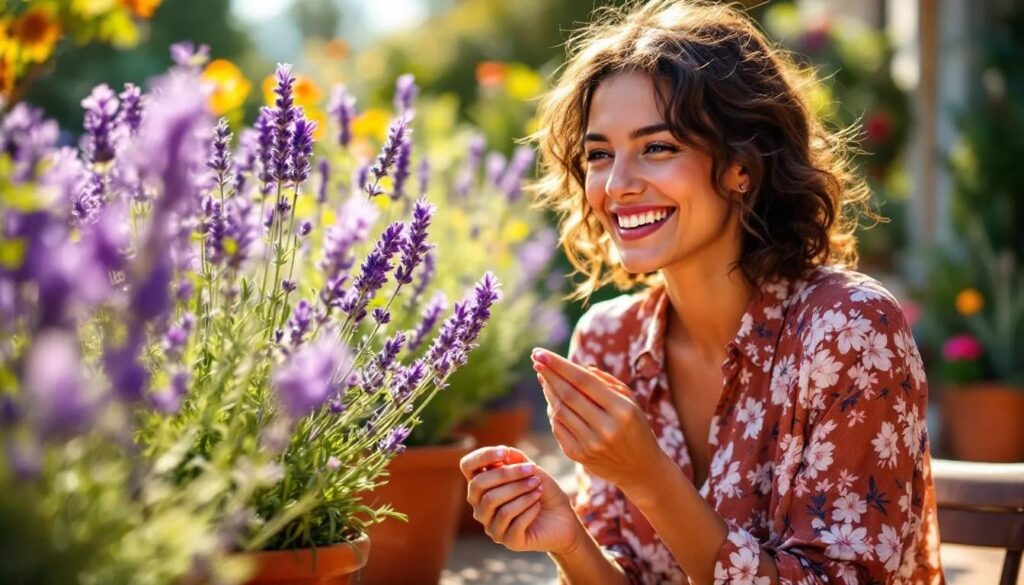
Spring is fully underway, and if your balcony, patio, or front porch still lacks that signature scent drifting through the air on a warm afternoon, the solution is simpler than reworking your entire garden. Container gardening has quietly become one of the most practical ways to bring fragrance exactly where you want it—right outside the door, beside a seating area, or framing a pathway. The right pot, the right mix, and the right plant can transform even the smallest outdoor space into something that genuinely stops visitors in their tracks.
Not every fragrant flower suits container life equally well. Some resent the confined root space; others actually bloom more intensely when slightly restricted. The thirteen varieties gathered here have all been selected because they combine powerful, pleasant scent with a proven ability to thrive in pots—whether terracotta, glazed ceramic, or lightweight resin. This is the season to plant them, and most are available at garden centres right now.
| Preparation time | 20–30 min per pot |
| Planting time | 30–45 min per pot |
| Time to first bloom | 2–10 weeks depending on variety |
| Estimated lifespan | 1 season to several years (variety-dependent) |
| Difficulty | Beginner to Intermediate |
| Best season to plant | Spring (March–May) |
What Makes a Flower Pot-Friendly and Fragrant?
Fragrance in flowers comes primarily from volatile organic compounds released by petals and, in some species, foliage. Warmth amplifies this release, which is why a south-facing terrace in late March already coaxes scent from even reluctant bloomers. Container growing concentrates the plant's resources and keeps roots at a manageable temperature—something that actually suits many Mediterranean and subtropical fragrant species far better than cold, waterlogged garden soil.
The practical requirements for a pot-friendly fragrant flower are: tolerance of restricted root run, sensitivity to drainage (most aromatic species despise wet feet), and sufficient resilience to handle the temperature swings that pots experience—warming quickly on sunny days, cooling sharply at night. Choosing the right pot size matters enormously. A container that is too large encourages root rot rather than flowering; most of the varieties below perform best in pots between 25 cm and 45 cm in diameter.
The 13 Best Fragrant Flowers for Pots
1. Gardenia (Gardenia jasminoides)
Few scents rival gardenia—creamy, heady, with an almost tropical richness that carries several metres on a still spring evening. In a pot of ericaceous (acid) compost, placed in a sheltered, sunny spot, gardenias repay the effort with weeks of waxy white blooms. Keep the compost consistently moist but never waterlogged, mist the foliage in dry spells, and feed with a specialist acid fertiliser every two weeks through spring and summer. They are sensitive to cold drafts, so position them away from doorways that are opened frequently.
2. Sweet Pea (Lathyrus odoratus)
Sweet peas are one of the great joys of a spring container display—fast-growing, easy from seed, and possessed of a honeyed floral scent that is almost the definition of an English garden in bloom. Sow directly into a deep pot of at least 30 cm to accommodate their long tap root, provide a small trellis or bamboo wigwam, and water generously once they are established. The more you cut the flowers, the more the plant produces. Heirloom varieties such as 'Matucana' and 'Lord Nelson' consistently outperform modern breeding lines for fragrance.
3. Lavender (Lavandula angustifolia)
Lavender is the default choice for a reason: it is drought-tolerant, almost indestructible in a well-draining pot, and its clean, camphor-edged floral scent is universally appealing. Use a gritty, free-draining compost—a mix of standard multipurpose and horticultural grit at roughly 60:40 works well—and position it in full sun. Lavandula angustifolia 'Hidcote' and 'Munstead' are compact enough for a 25 cm pot and flower reliably from late spring into summer.
4. Jasmine (Jasminum polyanthum or J. officinale)
The evening scent of jasmine is extraordinary—sweet, slightly exotic, intensifying as the temperature drops after sunset. Jasminum polyanthum is the more compact species for containers and produces clusters of pink-budded white stars from late winter through spring. Train it up a hoop or small obelisk, keep it in a warm and sheltered position, and prune lightly after flowering to maintain shape. A pot of at least 30 cm diameter in well-drained, loam-based compost gives the best results.
5. Heliotrope (Heliotropium arborescens)
Heliotrope carries a deep, warm vanilla-and-cherry scent that was enormously fashionable in Victorian conservatories—and for good reason. The dark purple flower clusters are visually striking against the deeply veined foliage. Treat it as an annual in cooler climates or overwinter it frost-free on a windowsill. Full sun and a regular liquid feed through spring and summer keep the blooms coming from now well into autumn.
6. Pinks (Dianthus spp.)
Dianthus—particularly the old-fashioned garden pinks rather than the modern cut-flower types—carry a spicy, clove-like fragrance that is especially pronounced on warm afternoons. They are genuinely compact, thriving in a 20–25 cm pot of gritty compost in full sun, and they are remarkably tolerant of dry conditions once established. Look for named varieties such as 'Mrs Sinkins', 'Gran's Favourite', or 'Doris' for the strongest scent.
7. Scented-Leaf Pelargonium (Pelargonium spp.)
These are not the standard bedding geraniums—scented-leaf pelargoniums release their fragrance from the foliage when brushed or warmed by sun, offering rose, lemon, mint, nutmeg, and even coconut notes depending on the variety. They are extraordinarily easy in containers, preferring slightly dry conditions and a gritty compost. Place them where people will brush past—beside a path, at the edge of a table—and the effect is immediate. P. graveolens (rose) and P. citrosum (lemon) are the most widely available.
8. Angel's Trumpet (Brugmansia spp.)
A more dramatic choice—Brugmansia produces enormous pendulous flowers, up to 30 cm long, in cream, peach, or deep apricot, and the evening fragrance is extraordinary: rich, narcotic, and tropical. It demands a large pot (minimum 40–50 cm), generous watering through spring and summer, and a frost-free position in winter. All parts of the plant are toxic, so site it away from children and pets and handle with gloves when pruning.
9. Freesia (Freesia spp.)
Freesia corms planted in early spring deliver one of the finest of all cut-flower scents—fresh, citrus-tinted, and clean without being sharp. In a pot of 20–25 cm diameter, plant corms with their pointed tips upward at a depth of roughly 5 cm, spacing them 5 cm apart. Full sun and moderate watering will bring them into bloom within eight to ten weeks. After flowering dies down, allow the foliage to yellow naturally before lifting and drying the corms for replanting.
10. Lily (Lilium spp.)
Oriental and Asiatic hybrid lilies are among the most reliable container subjects in the garden, and Oriental varieties in particular—'Stargazer', 'Casa Blanca', 'Tom Pouce'—carry a powerful, sweet, slightly spicy fragrance. Plant bulbs now, two to three per 30 cm pot, at a depth of roughly three times the bulb's diameter, in a free-draining loam-based compost. Stake as the stems lengthen, and deadhead individual flowers as they fade to prolong the display. Lily pollen stains fabrics badly—handle with care when the flowers fully open.
11. Wisteria (Wisteria sinensis 'Prolific')
Wisteria sounds implausible in a pot, but compact varieties grafted onto a standard stem—the so-called wisteria tree form—are genuinely manageable in a large container of 45–50 cm. The cascading lilac racemes carry a heady grape-and-vanilla scent that is unmistakably spring. Prune twice a year—once after flowering and once in late winter—to keep the vigour in check. Use a heavy, loam-based compost and secure the pot in a sheltered position: the large surface area of the foliage acts as a sail in strong wind.
12. Tobacco Plant (Nicotiana alata)
The old-fashioned species Nicotiana alata—not the compact modern hybrids bred for colour at the expense of scent—releases an intense, jasmine-like fragrance from dusk onward. The flowers open fully in the evening and on overcast days, which makes it ideal near outdoor seating used in the evening. Grow from seed or buy young plants, pot into a 25–30 cm container of multipurpose compost, and feed weekly with a high-potash fertiliser once the flower buds form. It self-seeds freely if allowed to set seed at the end of the season.
13. Rose (Rosa spp. — Patio and Miniature Varieties)
Patio roses bred specifically for container life—varieties such as 'Patio Hit', 'Warm Wishes', or the David Austin compact shrub 'Olivia Rose'—combine genuine fragrance with a manageable root system. Plant in a 35–40 cm pot of loam-based compost enriched with slow-release fertiliser granules, position in at least six hours of direct sun per day, and water at the base to avoid blackspot on the foliage. Deadhead regularly and feed with a specialist rose fertiliser every fortnight from bud formation through to the final flush of autumn. The scent—whether classic tea, myrrh, or fruity—rewards the modest effort considerably.
Practical Tips for Maximising Fragrance in Containers
Fragrance travels furthest on still, humid air and in the warmth of late afternoon. Position your most powerfully scented pots—jasmine, gardenia, oriental lily—near seating areas and away from prevailing wind corridors. A cluster of three pots at slightly different heights creates far more olfactory impact than the same plants spread individually around the garden, because the scents blend and amplify one another rather than dissipating.
Drainage is non-negotiable for almost every variety listed here. Place a layer of crocks, gravel, or perlite at the base of each pot before adding compost, and ensure that drainage holes are unobstructed. Sitting pots directly on a hard surface can block drainage; pot feet or bricks that lift the base by a few centimetres resolve this immediately.
Watering in the early morning allows foliage to dry through the day, reducing the risk of fungal issues. Evening watering—though sometimes more convenient—keeps moisture on the leaves through the cooler night hours, which increases disease risk particularly for roses and dianthus. Liquid feeding on a regular schedule from the moment flower buds appear is the single most effective intervention for extending the flowering season in containers.
Grouping and Displaying Fragrant Pots
A considered arrangement amplifies both the visual and olfactory effect. Combine tall structural plants—Brugmansia, standard wisteria, lilies—with mid-height bloomers like lavender and roses, then fill the foreground with compact pinks, freesia, and heliotrope. This layered approach mirrors planting design in a border but gives total flexibility: individual pots can be moved forward when at peak bloom and rotated back when spent. On a balcony or small terrace, three to five well-chosen containers will outperform a dozen mediocre ones scattered randomly.
Overwintering and Seasonal Care
Several of the plants on this list are either tender or borderline hardy and will need protection once autumn arrives. Gardenia, Brugmansia, scented-leaf pelargoniums, and heliotrope must be brought indoors before the first frost—a cool, bright room or unheated greenhouse is sufficient for most. Jasmine and lavender are generally hardy in mild climates but benefit from moving to a sheltered wall position through winter. Lilies and freesia corms can be left in their pots if the pots are insulated with horticultural fleece or moved to a frost-free shed until spring planting resumes.
Which of these fragrant flowers is easiest for a complete beginner?
Lavender, dianthus, and sweet peas are the three most forgiving choices for anyone new to container gardening. All three are widely available as young plants or seeds, tolerate occasional missed watering, and require no specialist compost or feeding regime to perform well. Sweet peas in particular are deeply satisfying: fast to grow, free-flowering, and so intensely fragrant that even a single pot beside a doorway makes a measurable difference.
Can these plants stay in the same pot for several years?
Perennial varieties—lavender, roses, wisteria, dianthus, and jasmine—can remain in the same pot for two to three years before requiring repotting into a slightly larger container. Annual varieties such as sweet peas, heliotrope, tobacco plant, and freesia are typically replaced each season. When repotting perennials, refresh at least the top third of the compost and incorporate slow-release fertiliser granules to replenish depleted nutrients.
How do I stop my potted plants from drying out too quickly in warm weather?
Three interventions make a significant difference: mulching the surface of the compost with a thin layer of horticultural gravel or bark chip slows evaporation considerably; adding water-retaining granules to the compost at planting time increases the soil's water-holding capacity; and grouping pots together reduces the wind exposure on individual containers. On the hottest days of summer, even drought-tolerant lavender and dianthus may need watering once a day in a small container.
Is it safe to place Brugmansia near a seating area?
All parts of Brugmansia—flowers, leaves, seeds, and stems—are highly toxic if ingested and can cause skin irritation on contact with sap. It is not a suitable choice for gardens regularly used by young children or where pets have unsupervised access. For most adult spaces, however, it is managed safely by wearing gloves when pruning, washing hands thoroughly afterwards, and positioning the pot where accidental contact is unlikely. The evening fragrance it produces is genuinely exceptional, and for the right garden it remains one of the most spectacular container plants available.
What is the best pot material for fragrant flowers?
Terracotta is the traditional choice and remains one of the best: it is porous, which regulates soil moisture and prevents waterlogging—exactly what most aromatic and Mediterranean species require. Its only drawback is weight and, in very cold climates, susceptibility to frost damage. Glazed ceramic offers similar aesthetics with better frost resistance. Modern lightweight resin or fibreglass pots are practical for balconies with weight restrictions and have improved considerably in appearance. Avoid dark-coloured metal containers in full sun: they heat up rapidly and can damage roots in warm weather.