



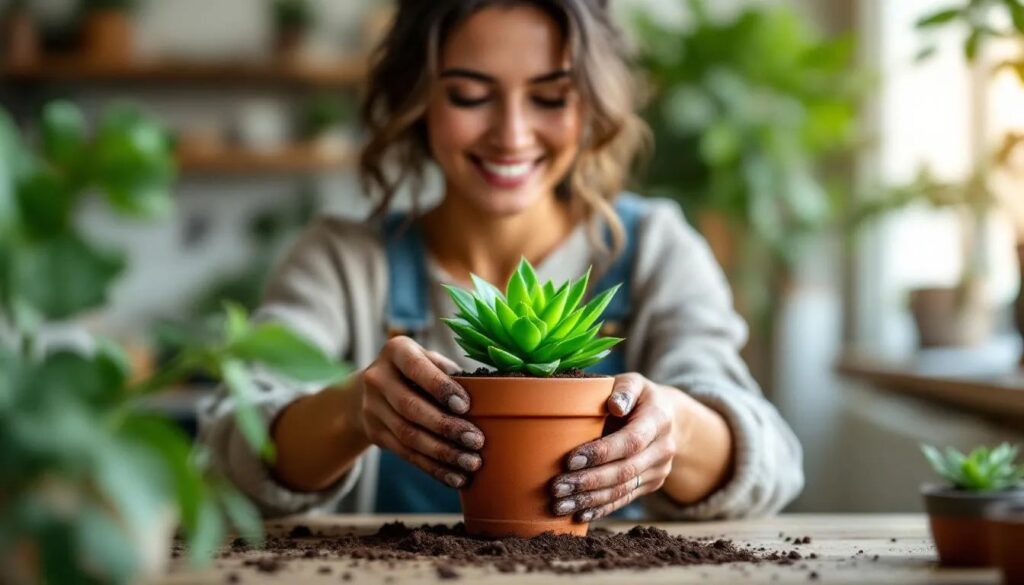
March arrives with longer days and that unmistakable shift in light — the kind that makes every windowsill feel like prime real estate. For houseplant enthusiasts, this is the moment the growing season truly begins: roots are stirring, stems are pushing out new growth, and the conditions for propagation are finally working in your favor again. Taking cuttings or dividing plants now means you can have a full collection of rooted, established houseplants ready to fill your home by the time spring is in full swing.
Propagating your own plants is one of the most satisfying — and cost-effective — ways to expand your indoor garden. A single healthy mother plant can yield dozens of new ones with nothing more than a clean blade, a glass of water, or a pot of fresh compost. The 13 plants below are all well-suited to March propagation, responding quickly to the season's rising temperatures and increasing daylight. Get your pots ready.
| Preparation time | 15–30 min per plant |
| Time to rooting | 2–8 weeks depending on species |
| Difficulty | Beginner to Intermediate |
| Best season | Early spring (March) |
| Estimated cost | $0–$15 per propagation batch |
Why March Is the Ideal Month for Propagation
As day length crosses the 12-hour threshold in late March, most houseplants exit their winter dormancy and begin actively producing auxins — the hormones that drive root development. Cuttings taken from a plant that is already mobilizing energy for growth will root significantly faster than those taken in November or January. Soil temperatures in most homes also rise slightly with the heating season tapering off and ambient warmth returning, which encourages microbial activity in potting mix and accelerates root formation.
March also gives new propagules the entire spring and summer to establish before the following winter. A cutting rooted now has six full months of good growing conditions ahead of it — time enough to develop a strong root system, push out genuine foliage, and become a self-sustaining plant rather than a fragile juvenile.
The 13 Plants to Propagate This March
1. Pothos (Epipremnum aureum)
Pothos is one of the most forgiving plants to propagate and the ideal starting point for beginners. Take a stem cutting just below a node — the small brown nub where a leaf meets the stem — ensuring at least two nodes per cutting. Remove the lowest leaf and place the cutting in a glass of room-temperature water on a bright windowsill, out of direct sun. Roots typically appear within 10–14 days in March. Once roots reach 2–3 cm, pot up into a well-draining houseplant compost.
2. Spider Plant (Chlorophytum comosum)
By March, mature spider plants are often trailing long stems tipped with plantlets — miniature copies of the mother plant complete with their own tiny aerial roots. Pin these plantlets directly into a small pot of moist compost while still attached to the runner, or snip them free and pot them individually. The pre-formed roots mean establishment is remarkably quick, often within two to three weeks.
3. Tradescantia
Tradescantia stems — whether the vivid purple Tradescantia pallida or the striped T. zebrina — root almost aggressively in spring. Cut a 10–15 cm tip, strip the lower leaves, and place several cuttings together in a single pot of moist perlite and compost. Bunching them creates a fuller, bushier plant from the outset. Expect visible root resistance when tugged gently after about two weeks.
4. Monstera Deliciosa
Monstera propagation requires patience but rewards it generously. Cut a stem section that includes at least one node and, ideally, an aerial root — the brown, cord-like structure that emerges from the stem between leaves. Place the cutting in water or moist sphagnum moss, keeping it in bright indirect light. Water propagation allows you to monitor root development visually; expect roots of usable length within four to six weeks in the warmth of early spring.
5. African Violet (Saintpaulia)
African violets propagate through leaf cuttings rather than stem cuttings. Select a healthy, mature leaf from the outer ring of the rosette and cut the petiole — the leaf stalk — to about 4 cm in length. Insert it at a 45-degree angle into a small pot of moistened seed compost or perlite. Cover loosely with a clear bag to maintain humidity. Tiny plantlets will emerge from the base of the petiole over the following six to eight weeks.
6. String of Hearts (Ceropegia woodii)
This trailing succulent-like plant responds well to two propagation methods in March: water propagation of short stem cuttings with at least two pairs of leaves, or the tuber method, where the small bead-like tubers that form along the vine are pressed gently into moist compost and left to root. The tuber method is particularly reliable and produces robust new plants with minimal intervention.
7. Rubber Plant (Ficus elastica)
Take a stem cutting of 10–15 cm from a healthy rubber plant, making the cut just below a node with a clean, sharp blade. The cut end will weep a milky latex — allow this to dry for 20 minutes before placing the cutting in water or moist compost. Wear gloves during this process, as the latex can irritate skin. Rooting takes four to six weeks; bottom heat from a propagation mat accelerates the process noticeably in March when indoor temperatures can still be variable.
8. Pilea Peperomioides
The Chinese money plant produces offsets — known as pups — at the base of the mother plant or emerging from the soil nearby. In March, as the plant comes out of its rest period, these pups appear with increasing frequency. Use a clean knife to separate a pup that has already developed its own roots, then pot it into fresh, gritty houseplant compost. Pups without roots can be placed in water until roots develop.
9. Begonia
Both cane begonias and rex begonias respond well to propagation in spring. Cane varieties can be propagated from stem cuttings placed in water; rex begonias are best propagated from leaf sections. Cut a healthy rex begonia leaf into 5 cm squares, each containing a major vein, and lay them flat on moist compost, pressing them gently into contact with the surface. New plantlets emerge from the veins over four to eight weeks.
10. Hoya
Hoyas root readily from stem cuttings that include at least two nodes. Unlike many houseplants, hoya cuttings tolerate a slightly drier medium — a mix of perlite and orchid bark works well, preventing the stem rot that can occur in overly wet compost. Place cuttings in bright indirect light and resist the urge to water frequently; the semi-arid conditions mimic the plant's natural epiphytic habitat and encourage root production rather than stem elongation.
11. Peace Lily (Spathiphyllum)
Peace lilies are propagated by division rather than cuttings. In March, as new growth emerges, remove the plant from its pot and gently tease apart the root ball, separating individual crowns — each with its own set of leaves and roots attached. Pot each division into fresh, moisture-retentive compost and water thoroughly. Divisions may wilt slightly for the first week as they adjust; this is normal and resolves quickly in warm spring conditions.
12. Aloe Vera
Mature aloe plants produce offsets or pups around their base. In March, carefully remove the plant from its pot and locate the pups growing from the root system. Detach them with a clean knife, ensuring each one has at least a few of its own roots. Allow the cut surfaces to callous over for 24 hours before potting into a free-draining, gritty cactus compost. Do not water for the first week — let the roots seek moisture rather than sitting in damp soil.
13. ZZ Plant (Zamioculcas zamiifolia)
The ZZ plant is one of the slower plants to propagate, but March is the best time to start. Take individual leaflets from a healthy stem and push their cut ends about 1 cm into moist perlite or a 50/50 mix of compost and perlite. Keep the medium barely moist and place the pot in a warm spot with bright indirect light. A small rhizome — the swollen underground storage structure that characterises this species — will form at the base of each leaflet over 8–12 weeks, eventually pushing up new shoots.
The Professional's Tip
In early spring, indoor temperatures can still fluctuate significantly between day and night, particularly near windows. A propagation mat set to 22–24°C eliminates this variability and dramatically improves rooting success across all species. If you do not have a mat, place your propagation pots on top of a refrigerator or near — but not directly on — a radiator. Consistent bottom warmth is often more influential than ambient air temperature when it comes to root initiation. For water-rooted cuttings, change the water every three to four days to prevent bacterial buildup, which can stall or damage developing roots.
Aftercare and Ongoing Maintenance
Once cuttings have rooted and been potted up, resist overwatering during the first month. New roots are tender and more susceptible to rot than established ones; water only when the top centimetre of compost feels dry to the touch. Place newly potted propagules in bright indirect light rather than a south-facing windowsill where intense spring sun could scorch foliage that has not yet hardened.
Begin feeding with a diluted balanced liquid fertiliser — at half the recommended strength — once you see clear signs of new leaf growth. This confirms that the root system is functioning and ready to process nutrients. By late spring, your propagated plants should be growing confidently and can be treated as established houseplants.
Going Further
If space is limited, prioritise fast-rooting species like pothos, tradescantia, and spider plant for your first March propagation session, then move on to slower subjects like ZZ plant and hoya once you have the workflow established. Most of the plants listed here can also be propagated in autumn, though rooting times will be longer and success rates slightly lower due to reduced light and temperature.
Propagating plants is not just an exercise in frugality — though sharing rooted cuttings with friends and family is one of the pleasures of the hobby. It also deepens your understanding of how each species grows, what it responds to, and how it structures itself. That knowledge makes you a more attentive plant keeper across the board.
Frequently Asked Questions
Do I need special equipment to propagate houseplants?
Most houseplant propagation requires very little equipment: a clean, sharp blade or pair of scissors, small pots or glasses, and a suitable medium such as water, perlite, or potting compost. A propagation mat is helpful but not essential, particularly in March when ambient temperatures begin to rise. A clear plastic bag placed over a cutting to retain humidity can substitute for a purpose-built propagator for most species.
How do I know when a cutting has successfully rooted?
For water-rooted cuttings, roots are visible directly. For cuttings in compost or perlite, gently tug the stem after three to four weeks — resistance indicates roots have formed and anchored the cutting. The most reliable sign is the emergence of new leaf growth, which confirms the plant is drawing water and nutrients through a functional root system.
Why are my cuttings rotting before they root?
Stem rot during propagation is almost always caused by excess moisture combined with insufficient light or warmth. Ensure your propagation medium is moist but not waterlogged, and that the cutting is placed in a warm, bright location. For susceptible species like hoya and rubber plant, allowing the cut end to callous for 30–60 minutes before placing it in the rooting medium significantly reduces rot risk. In water propagation, changing the water every few days prevents bacterial build-up.
Can I use the same potting compost for all propagated plants?
A general-purpose houseplant compost works for most of the plants on this list, but succulents and cacti like aloe vera benefit from a grittier mix with added perlite or coarse sand for drainage. Hoyas prefer an airy, chunky medium similar to orchid bark mixed with perlite. Starting cuttings in a lower-nutrient medium such as pure perlite or seed compost also reduces the risk of fertiliser burn on immature roots.
Is it better to propagate in water or in compost?
Both methods work well for the species listed here. Water propagation allows you to monitor root development and is highly reliable for pothos, tradescantia, monstera, and begonias. Compost or perlite propagation produces roots that are immediately adapted to a soil environment, which can mean less transplant shock when the cutting is potted up. For beginners, water propagation offers the most visual feedback and is a satisfying way to observe the process firsthand.