



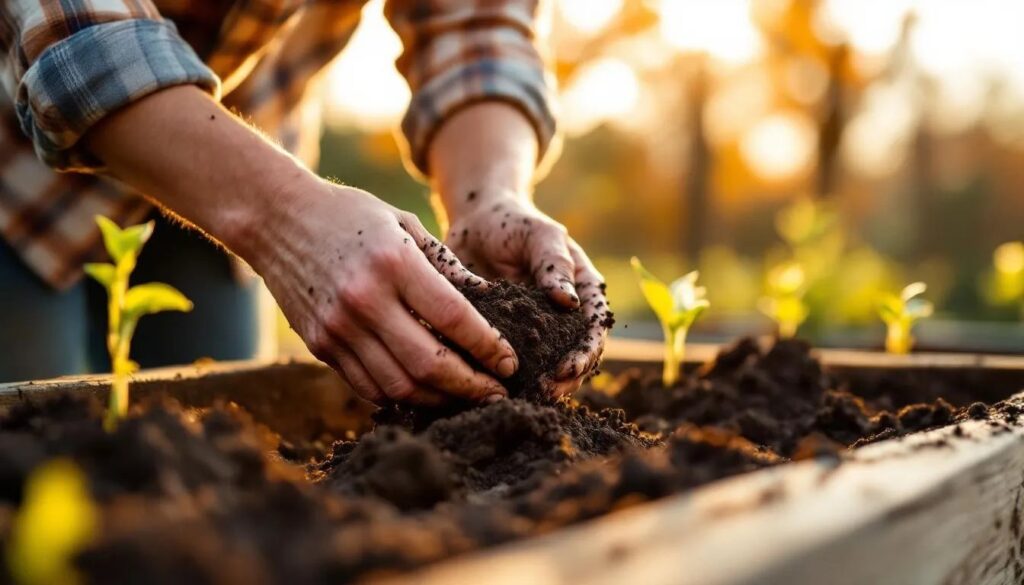
March arrives with longer days and soil that's slowly waking up after winter. For anyone growing vegetables, herbs, or fruit, the decisions made this month directly shape what ends up on the table come summer and autumn. The ground may still be cold in places, but beneath the surface, seeds are ready to respond — and so are the weeds. Getting ahead now, before the rush of April planting, gives crops the foundation they need to establish strong roots and resist the pressures of a full growing season.
This guide covers the practical groundwork that experienced growers start in March: soil preparation, early sowing under cover, pruning fruit trees and canes, setting up irrigation, and planning crop rotation. Each task builds on the last, creating a layered system rather than a checklist of isolated jobs. By the end of the month, the garden should be structured, fed, and ready to receive its first plantings with confidence.
| Preparation time | 2–3 hours spread across the month |
| Active working time | 8–15 hours total (varies by plot size) |
| Difficulty | Beginner to Intermediate |
| Recommended season | Early Spring (March) |
| Estimated cost | $40–$120 / £30–£90 depending on inputs needed |
Safety notes: Wear gloves when handling soil amendments, compost, and chemical fertilisers — some can irritate skin. Use knee pads or a kneeler pad to protect joints during extended ground-level work. When using sharp tools such as pruning saws or loppers, keep fingers clear of the cutting line and store blades sheathed.
Materials and Supplies
Soil Amendments
- 2–4 bags well-rotted compost (homemade or bagged, not fresh)
- 1 bag horticultural grit or perlite (for heavy clay soils)
- Organic general-purpose fertiliser (balanced NPK, granular form)
- Garden lime (optional — for acidic soils below pH 6.0)
Seed Starting
- Peat-free seed compost
- Seed trays and modular cell trays (at least 24-cell and 40-cell modules)
- Clear propagator lids or cling film for humidity retention
- Plant labels and waterproof marker
- Seeds: tomatoes, peppers, chillies, aubergines, onions, leeks, broad beans, peas
Pruning and Structure
- Sharp bypass secateurs
- Long-handled loppers
- Pruning saw (for branches over 2.5 cm / 1 inch in diameter)
- Wound sealant paste (optional, for large cuts)
- Bamboo canes and garden twine
Irrigation Setup
- Soaker hose or drip irrigation kit
- Hose connectors and end caps
- Water butt (if not already installed)
Tools
- Garden fork (border fork for raised beds, digging fork for open ground)
- Spade
- Garden rake
- Trowel and hand fork
- Hoe (Dutch hoe for surface weeding)
- Soil thermometer (optional but useful)
- Watering can with a fine rose head
- Wheelbarrow
- Kneeler pad or foam mat
Steps
1. Test and Prepare the Soil
Before adding anything to the ground, take stock of what you are working with. A basic soil pH test — available as a kit for a few dollars or pounds from any garden centre — tells you whether the soil is acidic, neutral, or alkaline. Most vegetables perform best between pH 6.0 and 7.0. If the reading comes in below 6.0, working in garden lime now gives it enough time to act before planting begins. Results outside that window affect nutrient availability regardless of how much fertiliser you apply, so this step anchors everything that follows.
Once you know where the soil stands chemically, turn it over with a garden fork to a depth of approximately 25–30 cm (10–12 inches). Work the fork in parallel rows rather than randomly, lifting and crumbling each section. If the soil is compacted — meaning it holds together in solid clods rather than breaking apart — this is the moment to incorporate horticultural grit at a rate of one bucket per square metre into heavy clay. Finish by spreading a 5–8 cm (2–3 inch) layer of well-rotted compost across the surface and raking it in. The compost improves structure, feeds soil organisms, and helps retain moisture through summer dry spells. The raked surface should feel crumbly and loose, not dusty or sticky.
2. Plan and Execute Crop Rotation
Crop rotation is the practice of moving plant families around the plot from year to year to avoid building up soil-borne diseases and pest populations. The four main groups to rotate are: brassicas (cabbage, kale, broccoli, Brussels sprouts), legumes (peas, beans), roots (carrots, parsnips, beetroot), and potatoes. Alliums (onions, garlic, leeks) and fruiting crops (tomatoes, courgettes, cucumbers) are typically added as a fifth group or slotted alongside legumes depending on plot size.
In March, before anything goes in the ground, sketch the beds on paper or in a notes app and assign each group to a different position from last year. This is far easier to do now than in May when memory fades and everything is already growing. Mark the beds with labels so the plan survives into the busier months. Following a three- or four-year rotation dramatically reduces the risk of clubroot in brassicas and eelworm in potatoes — two soil-borne problems that, once established, are nearly impossible to eradicate.
3. Prune Fruit Trees and Soft Fruit Canes
Late winter into early March is the final window to prune apple and pear trees while they remain dormant. The goal is to create an open, well-structured canopy that allows light into the centre of the tree and improves air circulation — both of which reduce fungal disease pressure through the growing season. Remove dead, damaged, and diseased wood first, cutting cleanly just above a healthy bud at a slight outward angle. Then look for crossing branches: where two branches rub together, one should come out. The standard guidance is to aim for a goblet shape — open in the centre, with five to seven main framework branches radiating outward.
For raspberries, cut all last year's fruited canes (identifiable by their darker, more fibrous bark) down to ground level with secateurs or loppers. Tie in the pale new canes to wires at 10–15 cm (4–6 inch) intervals. For gooseberries and redcurrants, shorten each lateral branch by about half and remove any branches growing low to the ground or crossing through the centre. All pruning cuts should be clean and crisp — a torn or ragged cut from a blunt blade introduces disease. Sharpen blades before starting and wipe them with a diluted bleach solution between plants if you have known fungal issues on the plot.
4. Sow Seeds Under Cover
March is the month when the seed-starting calendar accelerates. The soil outdoors is still too cold for most tender crops — the soil thermometer should read at least 10°C (50°F) before direct sowing most vegetables — but under glass or on a heated windowsill, a wide range of crops can be started now. Tomatoes, peppers, chillies, and aubergines all need a long growing season; started in March, they will be ready to plant out after the last frost, typically in late May or early June depending on your location.
Fill cell trays with peat-free seed compost, pressing it lightly into each cell without compacting it. Sow one or two seeds per cell at the depth specified on the packet — a general rule is to sow at a depth equal to twice the seed's diameter. Water gently using a watering can with a fine rose so as not to displace the seeds, then cover the tray with a propagator lid or a piece of cling film to hold humidity. Place on a warm, bright windowsill or in a heated propagator set to 18–22°C (65–72°F). Once seedlings emerge and develop their first true leaves, prick out — meaning transplant each seedling into its own individual pot — to prevent root competition. Label every tray immediately after sowing; varieties look identical as seedlings and confusion becomes costly later.
5. Direct Sow Hardy Crops Outdoors
While tender crops wait under cover, hardy vegetables can go directly into the ground in March. Broad beans and early peas are cold-tolerant and benefit from being sown as soon as the soil is workable — meaning it is no longer waterlogged or frozen solid. Use a trowel to make individual holes approximately 5 cm (2 inches) deep, spacing broad beans 23 cm (9 inches) apart and peas 7–8 cm (about 3 inches) apart in double rows. Cover and firm the soil gently. Both will germinate at soil temperatures as low as 5°C (41°F), though germination is quicker once the soil reaches 8°C (46°F).
Onion sets — small, immature onion bulbs — can also go in during March, pushed gently into raked soil so only the tip is visible, spaced 10 cm (4 inches) apart in rows 25–30 cm (10–12 inches) apart. Under cloches or fleece, carrots can be started in late March in a sheltered bed. Cover newly sown rows with horticultural fleece pinned at the edges to retain warmth, accelerate germination, and protect against early pest activity.
6. Set Up Irrigation and Raised Bed Infrastructure
March — before the beds fill up with crops — is the practical moment to lay or repair irrigation systems. A soaker hose threaded along rows, or a simple drip irrigation kit connected to an outdoor tap, saves significant time through summer and delivers water directly to root zones rather than wetting foliage, which reduces fungal disease. Lay the hose now, fix any leaking connectors, and test the system with the tap before planting begins and access becomes difficult.
Check raised bed frames for any damage from winter: split boards, sagging corners, or rotting timber at ground level. Reinforce corners with metal bracket plates if necessary. Top up the bed level with compost if it has sunk over winter — raised beds compact naturally as organic matter breaks down, and a flush, level surface makes sowing and planting easier. If you are adding a new raised bed this season, building and filling it in March means the soil will have settled and warmed by the time planting begins in earnest.
The Professional's Tip
Experienced growers in early spring pay close attention to soil temperature, not just air temperature. A sunny March day can feel warm, but the soil at 10 cm depth may still be sitting at 6–7°C — cold enough to rot pea seeds rather than germinate them. A cheap soil thermometer removes the guesswork entirely. Sow when the soil reads at least 7°C for peas and broad beans, and wait for 10°C before anything more tender goes in direct. If March is particularly cold and wet in your region this year, cloches placed over beds two weeks before sowing can raise soil temperature by 3–5°C without any other intervention — a straightforward technique that consistently improves germination rates on exposed plots.
Ongoing Care and Maintenance
Once seeds are sown and pruning is done, the work shifts to monitoring. Check seedlings under cover daily — compost in small cells dries out fast, especially near a radiator or in direct sun, and missed watering at the seedling stage sets plants back permanently. Harden off transplants gradually before moving them outside by placing them in a cold frame or sheltered spot during the day and bringing them in at night for at least two weeks.
In the open beds, surface-hoe between rows weekly from mid-March onward to catch weed seedlings before they establish. A Dutch hoe used with a push-pull action in dry conditions slices weed roots just below the surface — effective, fast, and far less disruptive to soil structure than hand-weeding. Remove any slug eggs uncovered during digging (pale, translucent spheres, typically found in clusters near the surface) and apply iron-phosphate-based slug pellets around vulnerable seedlings as an organic-approved precaution.
Going Further
For gardeners with limited outdoor space, most of these preparation tasks translate directly to raised beds on a patio, large containers, or a balcony growing setup. Modular cell trays can be started on any bright windowsill, and a single grow bag prepared with quality compost supports tomatoes, peppers, or courgettes through an entire season without needing in-ground soil at all.
For those expanding the plot significantly — adding new raised beds, erecting a polytunnel, or building a greenhouse — check local planning rules before construction. In the UK, most small garden structures fall under permitted development rights, but polytunnels on allotment sites may require permission from the site committee. In the US, structures above a certain size may need a building permit depending on local zoning codes. When in doubt, a five-minute call to the local planning or zoning office resolves the question before any money is spent on materials.
Estimated Costs
| Item | Indicative Cost (USD) | Indicative Cost (GBP) |
|---|---|---|
| Bagged compost (x3) | $18–$30 | £12–£22 |
| Seed starting kit (trays, compost, propagator lid) | $15–$25 | £10–£18 |
| Seed selection (tomatoes, peas, beans, onions) | $12–$20 | £8–£15 |
| Horticultural fleece (5 m roll) | $8–$12 | £5–£9 |
| Basic drip irrigation kit | $20–$40 | £15–£30 |
| Estimated total | $73–$127 | £50–£94 |
Frequently Asked Questions
When is it safe to start sowing seeds directly outside in March?
Direct outdoor sowing depends more on soil temperature than the calendar date. Wait until the soil at 10 cm depth reads at least 7°C for hardy crops like peas and broad beans. In colder regions or during a late winter, this may not happen until the final week of March or even early April. Placing cloches over the bed two weeks in advance speeds the process by warming the soil underneath before seeds go in.
Can March pruning damage fruit trees if a late frost arrives afterward?
Pruning dormant fruit trees in early March carries minimal frost risk because the cuts are made on wood, not on new growth. The danger period is later, once buds have broken and tender new shoots are exposed. If a hard frost is forecast after bud burst in late March or April, cover vulnerable blossom on trained wall fruit with a double layer of horticultural fleece overnight. Apple and pear trees in the open ground are generally robust enough to recover from light frost damage to early growth.
What is the most common mistake made during spring soil preparation?
Digging or working soil when it is too wet is the most damaging and widespread error. Walking on or cultivating waterlogged soil destroys its structure by compressing the air pockets that roots and soil organisms depend on — a condition called compaction that can take years to reverse fully. Perform a simple test before starting: pick up a handful of soil and squeeze it. If it forms a sticky ball that holds its shape when released, it is too wet to work. Wait for conditions where the ball crumbles when you press it gently with a thumb.
Do I need a heated propagator to start tomatoes and peppers in March?
A heated propagator is helpful but not mandatory. A warm windowsill above a radiator — consistently at 18–22°C (65–72°F) — works well for germinating tomatoes, peppers, and chillies. The key requirement is bottom heat during germination; once seedlings emerge, they need bright light more than warmth. A south-facing windowsill in March provides adequate light in most temperate regions, though a supplemental grow light can improve stockiness if the seedlings begin to stretch toward the glass.
How do I know if my soil needs lime before the growing season?
The only reliable way to know is to test the soil pH. Basic test kits cost very little and give a result in minutes. A reading below 6.0 generally indicates that garden lime would benefit most vegetable crops. Apply ground limestone or dolomitic lime in the quantities stated on the packaging for your soil type, working it into the top 15 cm (6 inches) of soil. Avoid applying lime at the same time as manure or nitrogen fertiliser, as the combination causes nitrogen to volatilise and reduces the effectiveness of both amendments. A gap of at least four weeks between the two applications is standard practice.